
Best scRNA-seq Analysis Tools in 2026: Compared
Compare ScarfWeb, Loupe Browser, Trailmaker, Partek Flow, BBrowserX Pro, Omics Playground, Pluto Bio, and ROSALIND for scRNA-seq and multi-omics analysis in 2026.

A practical comparison of the main single-cell and multi-omics analysis platforms, based on the things that now make the biggest difference in real projects: lock-in, scale, modality support, deployment, governance, and how far each tool goes beyond plotting into interpretation.

Figure 1: The single-cell stack from raw reads to interpretation; the upper stages are where platforms diverge in 2026.
Which scRNA-seq analysis tool should you use?
| Your priority | Start with | Why |
|---|---|---|
| 10x-only exploration on desktop | Loupe Browser | Free, native .cloupe and Visium support |
| Parse Evercode end-to-end | Trailmaker | FASTQ-to-insights inside the Parse ecosystem |
| Custom multi-assay pipelines | Partek Flow | Drag-and-drop builder across bulk, single-cell, spatial, and ATAC |
| Atlas-scale reference comparison | BBrowserX Pro | GPU-assisted browsing past 10 million cells |
| Pathway and functional interpretation | Omics Playground | Tertiary analysis across RNA-seq, scRNA-seq, and proteomics |
| Cross-functional multi-omics teams | Pluto Bio | Shared workspaces, SOC 2 Type II, many assay types |
| Guided collaborative interpretation | ROSALIND | Approachable cloud SaaS from FASTQ to clusters |
| No-code analysis with annotation evidence | ScarfWeb | Browser-native workflow with integrated CyteType characterisation |
| Maximum flexibility and control | Scanpy / Seurat / scverse | Open source when bioinformatics capacity is available |
The best workflow often combines a vendor-native tool for primary data with a broader platform once chemistries or teams multiply. See the capability matrix and how-to-choose sections below for detail on each platform.
The bottleneck has moved
For a long time, the hard part of scRNA-seq analysis was getting from raw reads to a clean, integrated, clustered object. That process is not trivial, but it is no longer where most platforms stand apart. The core workflow has largely converged around familiar methods: Harmony or scVI for integration, Leiden for clustering, UMAP for visualisation, with sensible defaults wrapped into increasingly accessible interfaces.
That means competent clustering is now table stakes. The real differences sit later in the workflow. Some tools are strongest inside one vendor ecosystem. Some are built for atlas-scale browsing. Some cover many assay types, while others stay close to scRNA-seq. Some stop at visualisation; others add pathway analysis, reference mapping, annotation, confidence scoring, or collaborative review.
Cell type annotation is part of this wider interpretation problem. We cover annotation methods in more depth in a separate guide, so this article keeps that topic focused on what matters for tool selection.
What actually separates these tools
File formats, no-code interfaces, and basic scalability used to separate tools clearly. In 2026, most serious platforms can tick those boxes. A better comparison starts with how the tool will behave in a real lab or translational team.
| Axis | What to evaluate |
|---|---|
| Position in the stack | Some tools start from FASTQ and replace the upstream pipeline. Others assume you already have a count matrix and focus on downstream analysis, review, and interpretation. |
| Ecosystem lock-in | Loupe is built around 10x Genomics outputs, Trailmaker around Parse Evercode, and Partek now sits within Illumina. The tight integration can be useful, especially when it is free, but the benefit drops once you mix chemistries. |
| Scale ceiling | Desktop tools are limited by local hardware. Cloud platforms can go further, and the more specialised atlas tools use GPU acceleration or database-backed designs to keep very large datasets interactive. |
| Modality breadth | scRNA-seq is rarely the whole story now. Many teams need CITE-seq, ATAC, BCR/TCR repertoire, spatial transcriptomics, or bulk and proteomics workflows in the same environment. |
| Interpretation depth | Plotting is only one layer. Pathway analysis, enrichment, functional-state resolution, reference mapping, marker evidence, and confidence scoring determine how much biological work the platform does for you. |
| Collaboration and reproducibility | Shared results, versioned analyses, permissions, and audit trails become important as soon as more than one person is involved. |
| Deployment and governance | Academic projects may be comfortable with cloud SaaS. Pharma, clinical, and partner-sensitive datasets bring harder questions around on-premise deployment, SOC 2 or ISO 27001 controls, data residency, and whether data can be used to train models. |
The open-source baseline
The baseline comparison point is still open source. Scanpy, Seurat, and the wider scverse ecosystem, including anndata, scvi-tools, and muon, remain the default for many labs with bioinformatics capacity. Galaxy also wraps many of these methods in a free, browser-based interface for users who need no-code access.
Commercial platforms are not trying to beat open source on flexibility. They win when they save time, make analysis usable by non-programmers, support collaboration, or satisfy governance requirements that ad hoc notebooks struggle to meet. If you have an experienced bioinformatician, no strict data residency constraints, and a team comfortable with R or Python, open source remains difficult to beat on cost and control. The case for a platform grows when wet-lab researchers need direct access, several sites need to collaborate, or the data has to stay inside a defined security boundary. For finding and reusing public reference data, see our guide to public single-cell RNA-seq databases in 2026.
Vendor-native tools
Vendor-native tools are built by the companies that sell the assay or sequencing ecosystem. They are often excellent inside that ecosystem and less useful outside it.
Loupe Browser, 10x Genomics

Image credit: Loupe Browser, 10x Genomics.
Loupe Browser is a free desktop application for exploring 10x Genomics data. It reads .cloupe and .vloupe files, along with Visium output from Cell Ranger and Space Ranger, without much setup. Current versions add Visium HD support and views for cell-type and pathway co-expression.
The fit is straightforward. Loupe is a good first stop for a 10x lab that wants to inspect its own data quickly. It can handle datasets above 1 million cells and supports Feature Barcode data, VDJ clonotypes, and multiome ATAC plus gene expression. Annotation is mostly manual and marker-based. Xenium in situ data is handled separately through Xenium Explorer.
The limitation is just as clear. Loupe does not offer batch integration, trajectory analysis, or pathway enrichment, and it is built around 10x outputs. It is useful for 10x exploration, but it is not a general-purpose single-cell analysis platform.
Trailmaker, Parse Biosciences and QIAGEN

Image credit: Trailmaker, Parse Biosciences.
Trailmaker is a cloud, no-code platform built for Parse Evercode data and now developed under QIAGEN. The Pipeline module takes Evercode FASTQ files through to matrices. The Insights module then guides users through clustering, differential expression, trajectory analysis, and visualisation.
The 2026 updates make it more useful for interpretation than earlier versions. Annotation now includes ScType, Decoupler, and CellTypist rather than relying on a single method. Parse has also added integrated immune repertoire support for BCR/TCR workflows, alongside whole-transcriptome and FFPE support.
For academic Evercode users, the appeal is obvious: it is free, guided, and closely matched to the chemistry. The trade-off is that it remains optimised for Parse data. If your lab combines multiple chemistries, Trailmaker is less likely to be the central analysis layer.
Partek Flow, Illumina

Image credit: Partek Flow, Illumina.
Partek Flow, now Partek by Illumina, is best understood as a modular analysis environment rather than a guided single-purpose tool. Its drag-and-drop pipeline builder lets users assemble custom workflows step by step. That gives more control than a simplified interface, but it also makes the learning curve steeper.
The platform spans bulk RNA-seq, single-cell, spatial, ATAC-seq, ChIP-seq, DNA-seq, and microarray analysis. It includes GSEA and pathway enrichment, and it connects directly with DRAGEN. Deployment can be cloud or local, with commercial enterprise pricing.
Partek fits core facilities and larger teams that want one rigorous environment across many assay types. It is less suited to users who want the fastest possible guided route from a matrix to a biological summary.
Atlas-scale exploration
BBrowserX Pro, BioTuring

Image credit: BBrowserX Pro, BioTuring.
BBrowserX Pro is built for large-scale exploration and reference comparison. It stays responsive past 10 million cells, supports CITE-seq, TCR, and spatial data, and includes subclustering, differential expression, enrichment, pseudotime, and cell-cell communication through an integrated CellChat database.
Annotation is reference-driven. BioTuring's MetaReference predicts cell types and subtypes against a curated database of more than 100 million cells, covering 54 cell types and 183 subtypes. The major 2026 development is Talk2Data, a GPU-accelerated multi-omics database of more than 500 million curated cells, opened to AI agents through the Model Context Protocol. BioTuring also lists ISO 27001 and ISO 27701 certification.
The strength of this approach is scale. If the job is atlas browsing, rapid comparison against a large reference universe, or exploration across many public and private datasets, BioTuring is strong. The trade-off is dependence on the reference and ontology, plus a Windows-desktop heritage alongside the more scalable Pro tier.
Collaborative multi-omics workbenches
These tools lead with breadth, shared workspaces, and governance. They are often less single-cell-specialised than the narrow tools, but better suited to cross-functional teams handling several assay types.
Omics Playground, BigOmics Analytics

Image credit: Omics Playground, BigOmics Analytics.
Omics Playground is a Swiss, no-code, cloud-based platform focused on tertiary analysis. It starts from the view that primary and secondary analysis are increasingly standardised, so the value lies in interactive interpretation.
It supports bulk RNA-seq, scRNA-seq, and proteomics, including Olink data. The platform includes a large library of interactive plots, pathway and enrichment analysis across tens of thousands of gene sets, drug-connectivity analysis for repurposing, and the recent PLAID algorithm for fast single-sample enrichment. Trial tiers limit dataset volume.
This is a good fit for researchers who want deep functional interpretation across modalities without building every plot and enrichment workflow themselves.
Pluto Bio

Image credit: Pluto Bio.
Pluto Bio is a collaborative multi-omics platform for translational teams, with origins at the Wyss Institute at Harvard. It supports scRNA-seq, spatial, bulk RNA-seq, ATAC-seq, ChIP-seq, CUT&RUN, proteomics, and metabolomics. The interface includes no-code pipelines, UMAPs, violin and ridge plots, plus GSEA, ORA, and STRING.
Its centre of gravity is not only analysis, but team workflow. Pluto offers shared interactive results, granular access control, version tracking, SOC 2 Type II, and GDPR readiness. That makes it relevant for cross-functional groups where biologists, bioinformaticians, and translational leads all need to work from the same result set.
The main limitation is that it is cloud-only and less single-cell-specific than tools built around scRNA-seq from the start. It is strongest when the team needs one secure home for many data types.
ROSALIND

Image credit: ROSALIND.
ROSALIND is a cloud SaaS platform built for approachability. Its single-cell module is centred on 10x data, taking users from FASTQ to clusters with Seurat-based clustering methods, knowledge-base-assisted cell type identification, differential expression, and views such as t-SNE, UMAP, and heatmaps.
Across the broader platform, ROSALIND covers RNA-seq, ATAC-seq, ChIP-seq, NanoString, and microarray. It supports up to 50 datasets per meta-analysis, draws from more than 50 pathway knowledge bases, and includes real-time collaboration and enterprise security features.
Trajectory analysis is not advertised for single-cell workflows. ROSALIND is therefore a better fit for teams that want a guided, collaborative interpretation environment than for groups that need fine-grained control over single-cell methods.
Browser-native analysis with built-in annotation
ScarfWeb, Nygen
Figure 2: CyteType integrated into ScarfWeb for in-session annotation with evidence and confidence.
ScarfWeb is Nygen's browser-native, no-code analysis layer for single-cell data. It is built on the open-source Scarf engine published in Nature Communications and has been used by more than 1,500 researchers across over 100 institutions.
It is vendor-agnostic and takes count matrices in formats such as MTX, H5AD, H5, and CSV. It also supports CITE-seq and HTO-multiplexed pools, which are separated automatically on import. The workflow covers QC and filtering, highly variable gene selection, batch correction and integration, PCA, UMAP and t-SNE, Leiden and Paris clustering, marker detection, differential expression, compositional analysis with statistical testing, pseudotime, and trajectory analysis. Runs are versioned, which helps keep analysis reproducible across collaborators.
Annotation happens inside the analysis session. ScarfWeb includes Nygen Insights, a fast ML-based auto-annotation feature that remains a strong free option for routine cell type annotation. CyteType, Nygen's powerful agentic workflow for cell type annotation and deeper characterisation, is now integrated into ScarfWeb and available free for a limited time. CyteType maps clusters to Cell Ontology terms and returns supporting marker evidence, functional state, and confidence scores. It is reference-free and is also available via pip install cytetype (Python) and an R/Seurat package.
ScarfWeb runs on AWS, with data encrypted in transit and at rest. It is GDPR-adherent, ISO 27001 certified, and SOC 2 ready. On the language-model side, CyteType supports zero data retention and can also be deployed on-premise or through AWS Bedrock for teams that need tighter boundaries.
ScarfWeb is the better fit when the priority is browser-based analysis without code, with the option to use either built-in auto-annotation or CyteType's deeper evidence-backed characterisation inside the same workflow.
At a glance
| Platform | Built by | Best for | Scale | Deployment |
|---|---|---|---|---|
| ScarfWeb | Nygen | No-code analysis with built-in auto-annotation and integrated CyteType characterisation | Large, browser-native | Cloud, CyteType integrated; on-premise option |
| Loupe Browser | 10x Genomics | 10x users exploring their own data | Around 1M cells, desktop | Local desktop |
| Trailmaker | Parse / QIAGEN | Parse Evercode datasets, VDJ, and whole transcriptome workflows | Cloud, high-throughput | Cloud |
| Partek Flow | Illumina | Custom multi-assay pipelines in one environment | Cloud or local | Cloud and local |
| BBrowserX Pro | BioTuring | Atlas-scale exploration and reference comparison | 10M+ cells, GPU-assisted | Cloud / desktop |
| Omics Playground | BigOmics | Functional and pathway interpretation across modalities | Cloud | Cloud |
| Pluto Bio | Pluto Bio | Cross-functional teams working across many assay types | Cloud | Cloud |
| ROSALIND | ROSALIND | Guided, collaborative interpretation | Cloud | Cloud |
Pricing changes too often to tabulate cleanly. Loupe is free for 10x data, Trailmaker has a free academic tier, and the open-source stack is free. The other platforms usually use commercial, contact-sales, or limited-trial models. Check current terms with each provider before committing.
Detailed capability matrix
| Capability | ScarfWeb | BBrowserX Pro | Omics Playground | Loupe | Trailmaker | Partek Flow | Pluto Bio | ROSALIND |
|---|---|---|---|---|---|---|---|---|
| FASTQ to matrix | No | No | Partial | No | Yes | Yes | Yes | Yes |
| Multimodal CITE/ATAC/VDJ support | Partial | Yes | Partial | Yes | Yes | Yes | Partial | Yes |
| Spatial transcriptomics | No | Yes | No | Yes | No | Yes | Yes | No |
| Batch correction / integration | Yes | Yes | Yes | No | Yes | Yes | Yes | Yes |
| Automated annotation | Yes | Yes | Yes | No | Yes | Yes | Yes | Yes |
| Annotation evidence + confidence | Yes | Partial | Not listed | No | Not listed | Not listed | Not listed | Not listed |
| Trajectory / pseudotime | Yes | Yes | Yes | No | Yes | Yes | Yes | Not advertised |
| GSEA / pathway analysis | Partial | Yes | Yes | No | Partial | Yes | Yes | Yes |
| Cell-cell communication | No | Yes | No | No | No | Partial | No | No |
| Public reference / atlas access | Yes | Yes | Yes | No | No | No | Yes | Yes |
| Real-time collaboration | Yes | Partial | Yes | No | Yes | Yes | Yes | Yes |
| Scales past around 10M cells | Yes | Yes | Partial | No | Yes | Yes | Yes | Yes |
| On-premise / local deployment | Via CyteType | Partial | No | Yes | No | Yes | No | No |
| Security / data handling | ISO 27001, SOC 2 ready, ZDR | ISO 27001/27701 | Not listed | Local only | Not listed | Enterprise | SOC 2 Type II | Enterprise |
ScarfWeb is cloud-hosted on AWS. CyteType, Nygen's powerful agentic workflow for cell type annotation and deeper characterisation, is integrated into ScarfWeb and available free for a limited time. ScarfWeb's built-in auto-annotation feature remains a powerful alternative and is included free. CyteType also offers on-premise and AWS Bedrock deployment.
Loupe's capabilities apply to 10x assays only. ROSALIND's single-cell module is built around 10x data, and trajectory is not advertised on its current single-cell pages.
This table was compiled from public product information available in June 2026; verify current details with each provider.
How to choose
If your lab is committed to one chemistry, start with the vendor-native tool. Loupe is the natural first option for 10x data, Trailmaker for Parse Evercode, and Partek for teams already working heavily inside Illumina's ecosystem. The integration is usually tight, and in some cases free. You only need to look beyond those tools when you start combining chemistries, need deeper interpretation, or need a workflow that other teams can reuse.
For atlas-scale browsing and reference comparison, BBrowserX Pro is built for that job. For a shared workspace across many assay types, Omics Playground, Pluto Bio, and ROSALIND are closer competitors, with the choice depending on interface preference, analysis depth, and governance requirements.
If you already have strong bioinformatics support and no residency constraints, the open-source stack remains the most flexible route. If the priority is to run analysis in the browser without code, while keeping annotation evidence and confidence attached to the result, ScarfWeb is the better fit.
Frequently asked questions
What is the best scRNA-seq analysis tool in 2026?
There is no single best tool for every lab. Loupe Browser fits 10x-only desktop exploration. Trailmaker fits Parse Evercode end-to-end workflows. BBrowserX Pro fits atlas-scale reference comparison. ScarfWeb fits browser-native analysis with built-in annotation evidence. The right choice depends on chemistry lock-in, scale, modality breadth, and governance requirements. Use the decision table above as a starting point.
Which tool is best for 10x Genomics data?
Loupe Browser is the natural first stop for 10x labs exploring their own data locally. It reads native 10x outputs including Visium and supports Feature Barcode and VDJ views. ROSALIND also targets 10x single-cell workflows in the cloud. For vendor-agnostic analysis with integrated annotation, ScarfWeb accepts count matrices from any chemistry including 10x.
Which scRNA-seq tool is best for Parse Evercode data?
Trailmaker is built for Parse Evercode data and now developed under QIAGEN. Its Pipeline module runs FASTQ to matrix, and Insights covers clustering, differential expression, trajectory analysis, and annotation. For academic Parse users it is free and closely matched to the chemistry.
Should I use a no-code platform or open source for scRNA-seq analysis?
Open source with Scanpy, Seurat, and scverse remains the most flexible and cost-effective route when you have bioinformatics capacity and no strict data residency constraints. No-code platforms like ScarfWeb, Pluto Bio, and ROSALIND win when wet-lab researchers need direct access, teams need shared workspaces, or governance requirements make ad hoc notebooks hard to audit.
Which platform offers cell type annotation with evidence and confidence scores?
ScarfWeb integrates CyteType for in-session annotation with marker evidence, functional state, and confidence scores attached to each cluster label. BBrowserX Pro offers reference-driven annotation against BioTuring's MetaReference database. For a deeper look at annotation methods, see our cluster annotation guide.
ScarfWeb takes single-cell data from a count matrix to annotated, interpretable, shareable results in the browser, without code or local installation. Its built-in auto-annotation feature is included free, and CyteType, Nygen's powerful agentic workflow for cell type annotation and deeper characterisation, is currently integrated into ScarfWeb and available free for a limited time. For teams that need analysis to stay inside their own boundary, CyteType is also available for on-premise deployment.
Related articles

Public single-cell RNA-seq databases worth using in 2026
An updated guide to the most useful public single-cell RNA-seq databases in 2026, including archives, curated discovery portals, and domain-specific atlases for data discovery and reuse.
Read more →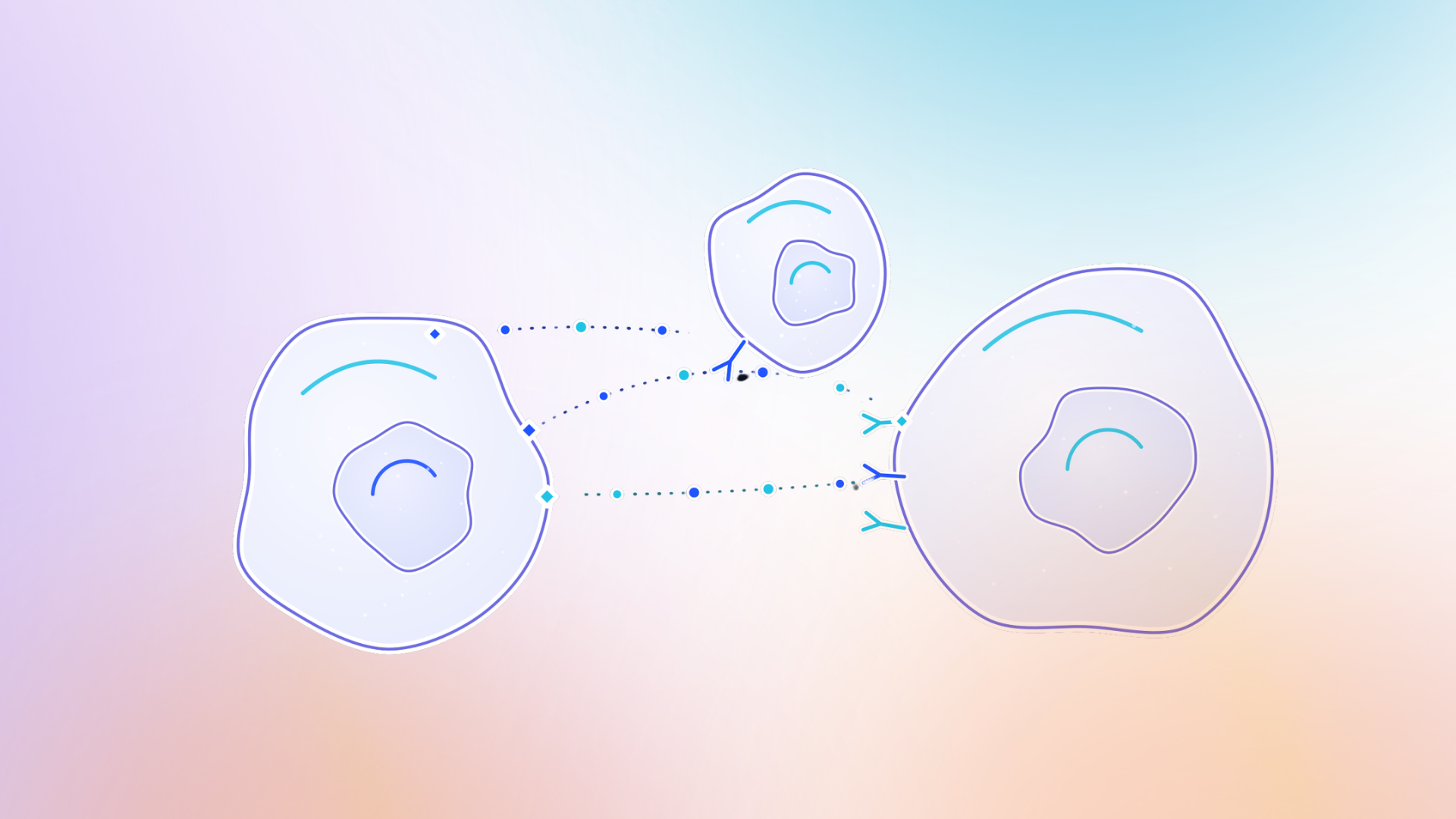
The biology in your ligand-receptor analysis, and how to read it
Ligand-receptor analysis is easy to run and easy to over-read. How to get cell-cell communication biology from the ranked table, with LIANA and ScarfWeb.
Read more →
Multi-Omics Data for Target ID in Drug Discovery
How human genetics, single-cell transcriptomics, chromatin accessibility and proteomics combine into causal, cell-resolved target evidence, where integration usually fails, and how to grade the result before a programme is committed.
Read more →