Cherry-picking is a bigger annotation risk than hallucination
Cherry-picking in LLM cell annotation survives reference checks unlike hallucination. Learn why biased marker subsampling is the harder risk and how CyteType prevents it.
Read more →A curated index of articles, updates, events, and published work across single-cell research.
Cherry-picking in LLM cell annotation survives reference checks unlike hallucination. Learn why biased marker subsampling is the harder risk and how CyteType prevents it.
Read more →
Parashar and Dylan discusses where AI truly delivers in biopharma, the persistent gaps in exploratory data analytics, and the critical bottlenecks in single-cell annotation. In a world abounding in AI hype, Parashar helps us cut through the noise and point out paths to data driven success.
Listen →
Why we rebuilt CyteType as a structured AI workflow instead of an agent, and why that distinction matters for production cell annotation pipelines.
Read more →
Running CyteType's AI agents across thousands of single-cell RNA-seq datasets in production exposed run-to-run variance, selective evidence gathering, and inconsistent depth. We rebuilt cell type annotation as a structured LLM workflow for more reproducible, auditable results in drug discovery pipelines.
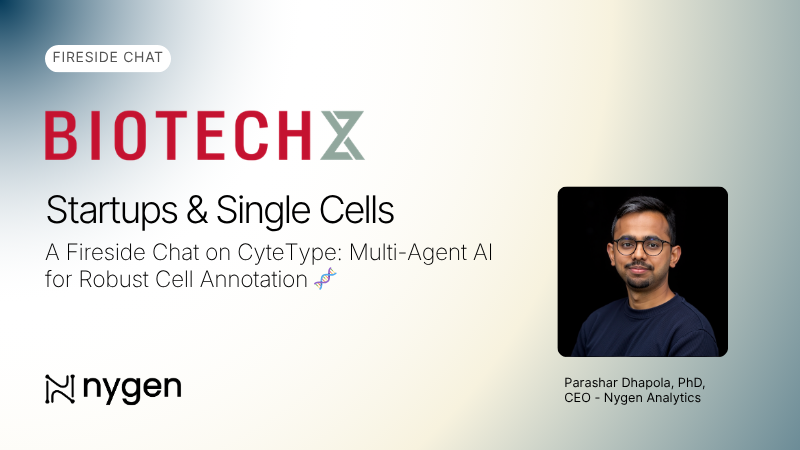
Read more →Fireside chat with Parashar Dhapola on building Nygen and how CyteType uses structured AI for evidence-grounded cell annotation. Hosted by BIOTECH XYZ.
Read more →
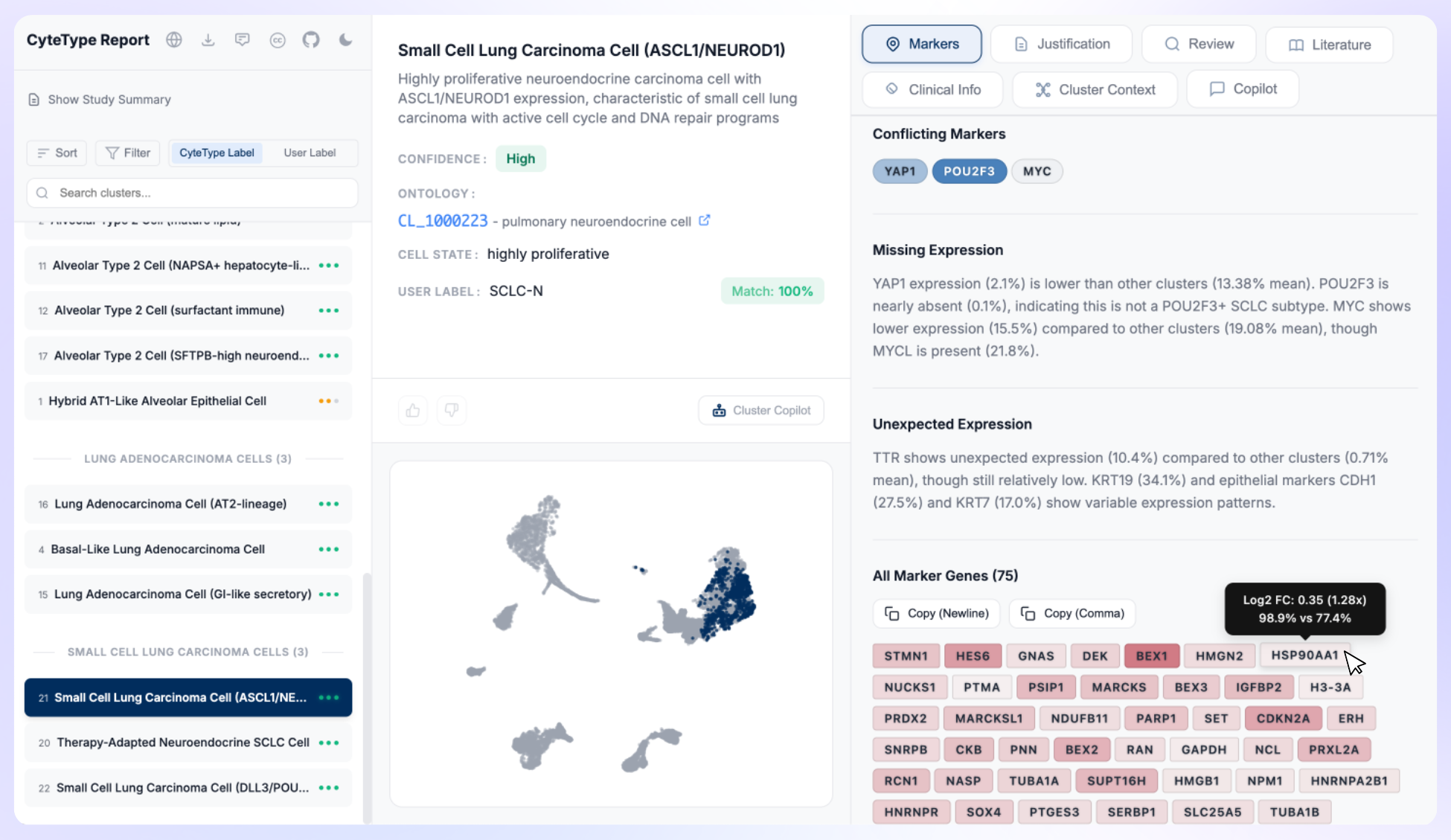
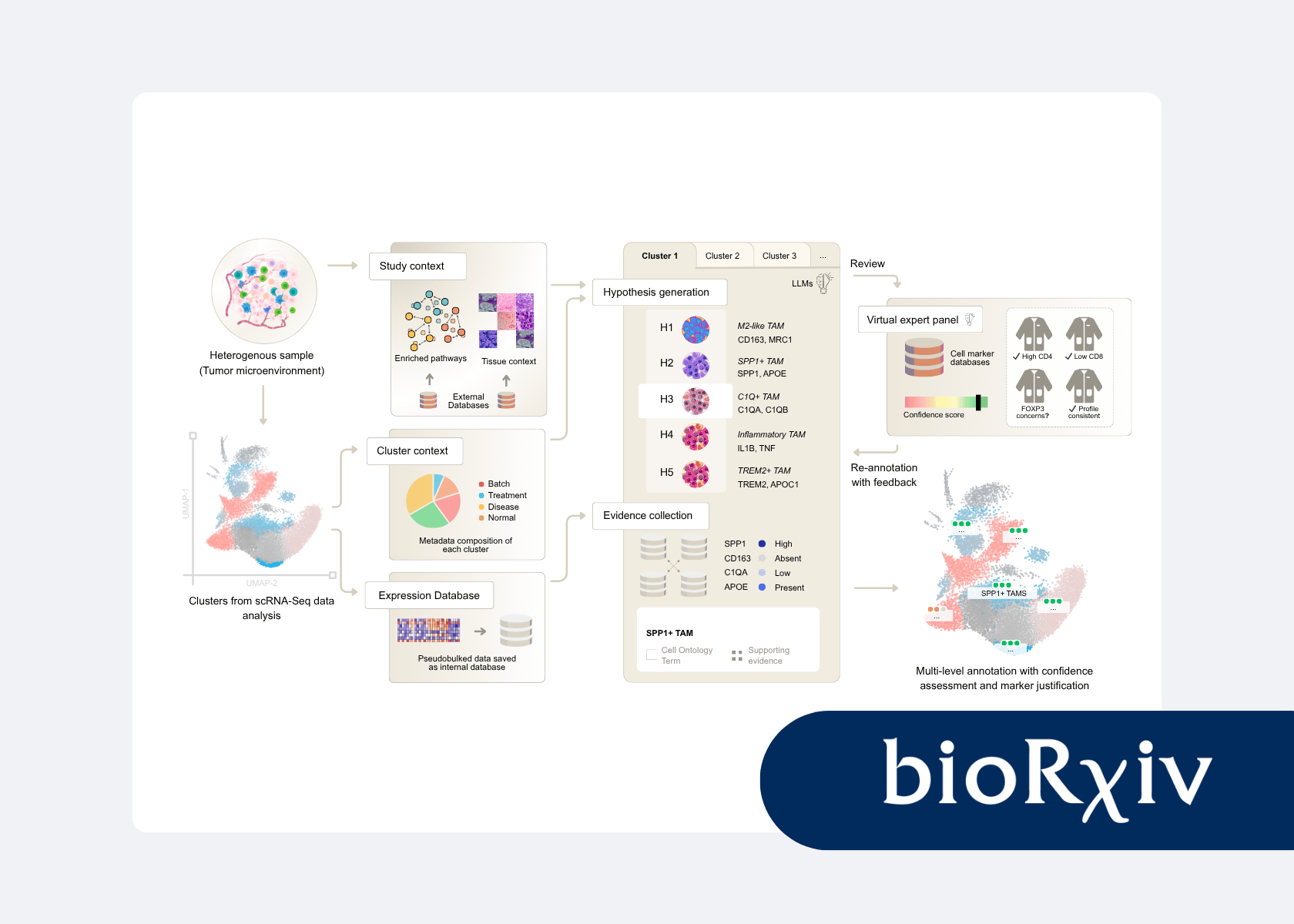
CyteType uses a five-agent AI framework for accurate cell type annotation in scRNA-seq data. Outperforms existing annotation methods by 388% over GPTCellType, 268% over CellTypist, and 101% over SingleR in benchmarking.
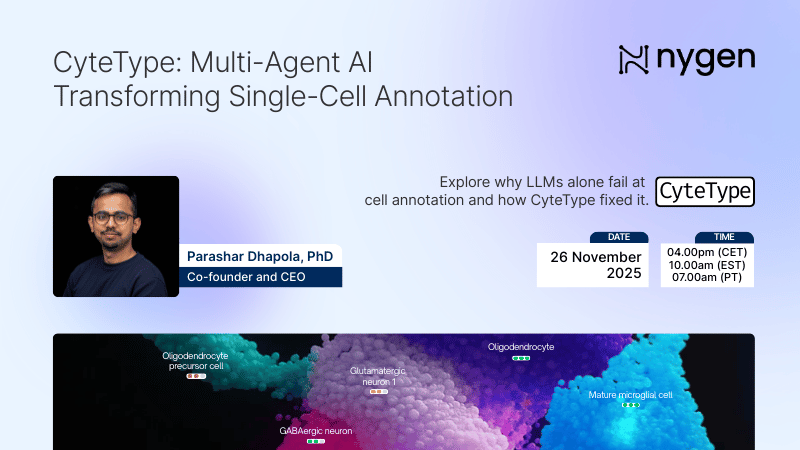
Read more →Explore why LLMs alone fail at cell annotation and how CyteType fixed it.
Read more →
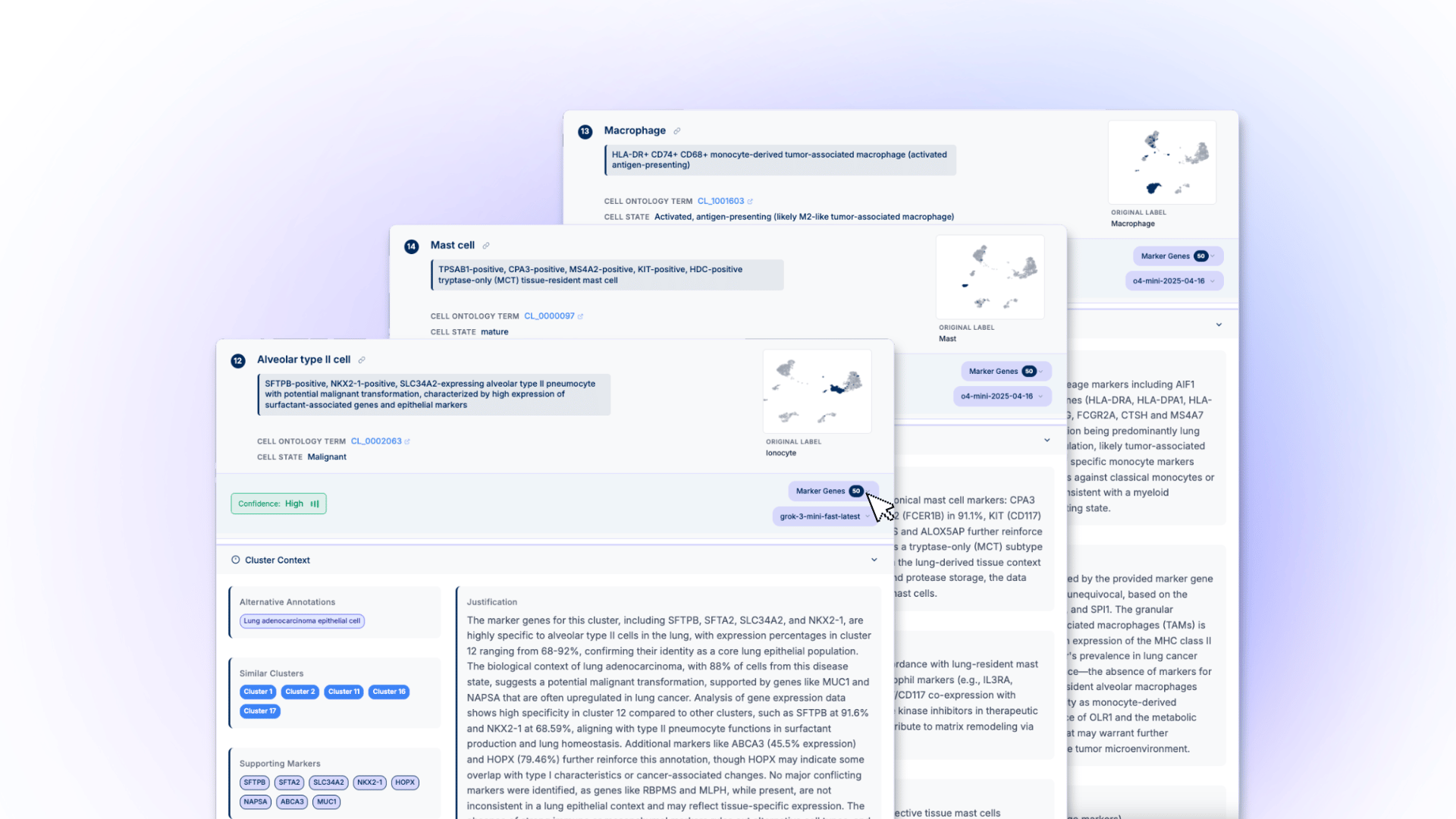
The original 2025 announcement of CyteType for single-cell RNA-seq cluster annotation. CyteType has since been rebuilt as a structured AI workflow for accurate cell type identification, literature validation, and pathway-level reasoning beyond traditional marker-based methods. Built for researchers seeking precise, evidence-backed single-cell data analysis with comprehensive biological context.
Read more →
How to annotate scRNA-seq clusters in 2026: marker genes, reference mapping, supervised tools, and separating cell identity from cell state.
Read more →
Gautam Ahuja et al. demonstrate how multi-agent AI systems enable evidence-based cell annotation in scRNA-seq data.
Read paper →